ABN: 11 641 139 568

Blog

Installing Drywall: DIY Project or Hire a Professional

Drywall can easily be installed by a professional or competent do-it-yourselfer. While online video tutorials can help any competent DIYer install drywall, some procedures are more complex than they appear in the tutorials. The tutorials seem easy to follow, but as most DIYers know, it’s rarely that simple.


This article covers the basics of drywall installation for the average DIYer and when it’s time to call in a professional.


Phase 1 – Drywall Sheets Cutting – DIY Friendly 


The first step of a drywall installation is to cut the sheets to size. This is a relatively easy task and can be completed without much difficulty by a competent DIYer. To put up drywall, you need to measure the wall or ceiling space and cut the drywall sheets to fit the required length.


There are several ways to cut a drywall sheet. The easiest and cleanest way is to score and snap it. To do this, use a straight edge, ruler and pencil to mark the drywall where you want to cut. Then, take a utility knife and score the drywall along the line.


Place the piece you want to remove over a ledge and snap it off by applying firm downward pressure. If you fold the sheet correctly, it should make a snapping sound along the score mark you made earlier.


You can use many tools to cut holes for power outlets and switches, ceiling lights, etc., but the most critical part is getting accurate measurements of where the holes should be. Cutting the gaps is easy; making sure they’re in the right place is difficult.


Phase 2 – Drywall Fastening to a Timber Frame – DIY friendly 


Use the appropriate fastener to secure the cut sheets of drywall to the timber frame. This process is easy to do yourself and does not require special skills or knowledge. 


Two primary fasteners are used to secure drywall sheets: drywall nails and screws. The exact kind of fastener you use will depend on the specific requirements of your project. Experts and drywall professionals can advise you on the best product for your needs.


Having someone hold the sheet in place while you secure it when working with drywall is helpful. This is especially a fact when working on a ceiling, as holding the large sheets of drywall overhead can be tiring.


Make sure that any screws or nails are countersunk below the surface of the drywall so that they can be covered with plaster later. This will give the wall a smooth, seamless finish.


Phase 3 – Mudding, Taping, and Sanding – Not So DIY friendly 


Now that the drywall is secure, it’s time to fill the joints with mud, then tape and sand them, so the final product is smooth and seamless. These steps may not be challenging, but getting a quality finish requires skill and finesse, which can only be developed with practice.


If you want a perfect finish, hiring a professional plasterer is best if you don’t mind joints being visible in certain lighting conditions, so you could try doing it yourself.


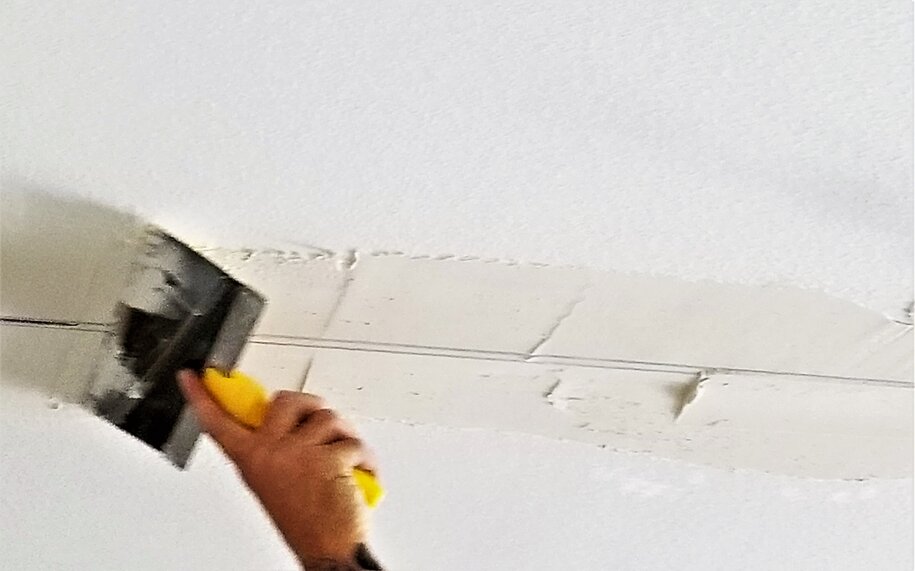
Apply a generous layer of plaster jointing compound, or “mud,” over the joints. Then apply a strip of drywall tape over the joint to which you just applied the mud. Use a drywall putty knife to press the tape into the mud and wipe off any excess mud, so the surface is smooth. Allow the mud to dry.


Once the area is dry, sand it lightly to remove any bumps. Then apply a second layer of joint compound using a wider putty knife. Try to feather the edges, so it blends in with the surrounding area. Afterwards, allow it to dry.


Try to blend the joint into the adjacent surface. Allow it to dry before starting the final sanding with fine-grit sandpaper. This will prepare the surface for painting.


Conclusion


Now that you know the basics of drywall installation, you can decide whether to do the project yourself or hire a professional. The first two stages of drywall installation are usually pretty simple and can be done without professional help.


Plastering requires a high level of skill to achieve a seamless finish, which can only be attained with professional experience. Plasterers use high-quality tools to complete the job more quickly and to a higher standard than the average DIYer. Although you could buy the necessary equipment, the cost would cancel out any savings from doing the job yourself.


If this is your first drywall project, hire a professional to finish the job. Plaster & Recruit is a registered plastering company that can help install drywall in Brisbane, Gold Coast and Queensland areas. To get started, contact us today.
Common Causes of Ceiling Cracking and What to Do about Them

Are you seeing cracks in your Gyprock ceiling? At times, the crack is just a cosmetic issue that is an eyesore but not anything you should be particularly worried about. However, it may also indicate that something is genuinely wrong, and you should take action immediately to fix it. 


Here are some of the typical reasons for ceiling cracks and what you can do to ensure your effort to fix the ceiling addresses the underlying source of the issue.


Paint Peeling Off the Surface


The paint on the ceiling may be peeling for several reasons, as you may have seen. High humidity, inadequate surface preparation before painting, applying too many coats of paint, or employing a paint type incompatible with the surface are all possible causes.


You can apply the appropriate paint to cover the area and scrape off the loose paint when this occurs. Always give each coat ample time to dry completely before adding the following ones. It’s a good idea to attempt to lower the room’s humidity levels to avoid this happening again.


Fine, Spiderweb-Like Cracks


If you notice spiderweb-like cracks on the ceilings, it may result from joint compound splitting or older layers of paint that have aged and cracked. A thick coating of joint compound tends to shrink after application, leading to the emergence of small fissures.


You might use a thin coating of drywall compound to hide these flaws. They’re typically just superficial flaws and don’t need immediate intervention.


Cracks with Staining or Discoloration


There may occasionally be a brown or yellow stain in the ceiling cracks. This can signify an above-water leak that seeps through to the ceiling. The joint tape may become loose as a result, developing fissures. Unattractive discolouration may result from dampness or water.


You must first repair these ceiling fractures before fixing the water leak. To determine the source of the current problem, you might speak with a plumber. They will examine the roof for any damage that would allow rainfall to enter the roof and check the water pipes for leaks.


Remedial treatment on the water-damaged ceiling may only be carried out once the root cause has been appropriately identified and treated. This usually calls for replacing a part of the joint tape with a new segment of tape fastened using two or more coatings of joint compound. 


Certain plasterboard portions might also need to be replaced if the water leak significantly damages them. You might want to hire a reliable plastering service for a task like this.


Cracks Where the Ceiling Meets the Wall


Truss uplift may cause any fractures you notice around the points where the ceiling and the wall meet. The roof trusses tend to vary due to the changing seasons and humidity, which causes them to move or shift a bit. Even though this is a prevalent problem, most houses are built to withstand changes in roof truss height.


Although it is often not a structural issue, a cosmetic fix will not prevent the trusses from being the cause of the fractures. It could be necessary to make some alterations, such as reattaching the plasterboards to the trusses.


Conclusion


As you can see, cracks in your ceilings are usually a result of a wide variety of different causes. This can make fixing them a confusing and frustrating task for homeowners.


If the cracks on your ceiling result from any of the problems mentioned, you should take the necessary action immediately. Do you need help with your Gyprock ceiling in Brisbane? We Plaster & Recruit provides the best fully licensed and insured plastering services. Request a quote today! 

Plaster: Cause of Cracks & How to Find a Long-Lasting Option?

Because it is durable, mould- and fire-resistant, and it reduces noise, plaster is a common material for walls. Why then would such a robust, long-lasting building material lose favour?


People who live in older homes are aware of the plaster’s flaw because it was a popular wall covering up until the 1950s.


Plaster’s ingredients can vary, although they are often water, sand, lime, and occasionally horsehair. 


Plasterers on Gold Coast put a plaster on walls or ceilings after mixing it to a paste-like consistency. It can be applied thick for a smooth finish or thinly for artistic features like ribs or swirls. The mixture becomes extremely brittle and rock-hard after drying, making it vulnerable to fracture.


The good news is that most plaster cracks are only cosmetic and won’t cause more problems. Find nearby plastering service on the Gold Coast to inspect any new or unusual cracks for a piece of mind, nevertheless.


What Leads to Cracks in Plaster?


It helps to see inside the plaster wall to comprehend why plaster splits. Lathes, horizontal wooden strips, are nailed over the framing to construct a plaster wall. Plaster is then applied, seeping behind and between the lathes.


The key is formed when the plaster applied on top of and behind the lath strips dries hard. The plaster and lath strips are secured together by the key. 

After that, a few more plaster layers are added on top and smoothed out. All those layers are fragile and could shatter as the home shifts, or the wall is impacted by daily life.


Plaster’s Weak Spots


Plaster cracks are more likely to be found in a wall’s natural weak spots, including the studs and joists, doors, windows, and the space between levels in a stairwell.


Your home generally settles with the earth’s ongoing settling process. But plaster that is brittle and hard doesn’t like to settle. Rather, it fractures. A doorway or the framing may be where a crack first appears. It frequently spreads diagonally from there.


A plaster wall frequently has a few tiny cracks. A moment of carelessness could result in hitting the wall and breaking it. As a result of the materials’ seasonal expansion and contraction, some cracks even appear and disappear.


Nearly all of the house’s doors and windows may have fractures at their corners. This is a result of apertures absorbing settling stresses.


Professionals nail lathes to solid wood between the floors to prevent wet plaster from gathering and forming a key to hold a house together. Thus, cracks start to show after a while.


The strongest part of the home is the other area where the plaster is vulnerable. Everything centres around the fireplace and chimney since they are solid rock. This explains why the area around the fireplace and chimney frequently has cracks.


New Cracks May Indicate Foundation Issues


In the first ten years, a house settles the most. If you notice fresh plaster cracks in an older home, they may indicate a structural problem rather than an aesthetic one. Look for cracks in the crawl space or basement below. If you notice them there, a foundation problem may need to be fixed.


Making Easy Cosmetic Repairs


The simplest method is to caulk the plaster crack before painting over it if you only need a cosmetic fix to make a crack blend in with the wall more seamlessly.


  1. Apply a thin bead of acrylic latex caulk along the crack.
  2. Apply the caulk to the crack with your finger perpendicular to the crack. Caulk will be forced into the crack as a result.
  3. Use a sponge to remove excess caulk, leaving only the remaining in the crack. Although it would appear that you have done nothing, the crack will now be covered by paint.

When Pieces of Plaster Fall Off


Plastering over cracks won’t keep the plaster attached to the walls. If pieces of plaster fall off, moisture may have entered and compromised the structural integrity of your walls. This makes it crucial to look into fresh cracks as soon as you notice them.


If the plaster is applied without room for keys to develop, it may break off and harm the plaster.


Conclusion 


The good news is that plaster is quite durable and typically won’t just break off. It’s acceptable to leave the walls as they were constructed if you adore your plaster walls, which many property buyers do as well. Ultimately, make sure to choose reputable and reliable services that offer plastering on the Gold Coast. 


Are you trying to find a plastering service on the Gold Coast ? We Plaster & Recruit, fully licensed and insured, offer the greatest plastering services. Get a quotation right away!

Four Tell-Tale Signs You Need to Repaint Your House

Repainting is one of the best ways to refresh the look of your house. And while it’s unreasonable to have your home repainted constantly, it will benefit you to know when to best repaint your home. This can be rather difficult to figure out, especially if it’s not really something that you pay attention to. To help make things easier for you, we thought it would be useful to put together a brief article on this subject. If you want to learn more about this, read on as we list down four tell-tale signs that indicate that your house needs repainting.


Fading Colours


Let’s start with the most obvious sign that your house needs to be repainted: fading colours. If you find that the paint’s colours are fading, then it may be time to repaint your walls. While this doesn’t really have any negative repercussions, fading paint will make your home look unappealing and dishevelled. 


Peeling and Cracking Paint


There’s no ignoring it – when the paint starts peeling or cracking, it’s time for a new paint job. This usually happens when water vapour collects between the structure and the paint, causing the paint to peel away from the surface. Peeling paint can be a sign of a leak or poor ventilation, so be aware of these issues when you’re fixing the peeling paint. If you see spidery cracks in your exterior paint, you have a similar problem. Cracking can cause paint to chip and flake off the walls and ceilings, leaving old paint flakes on the floor. Unfortunately, peeled or cracked paint won’t get better over time. The only option is to repaint. We suggest not hesitating when it comes to either of these issues, as water damage will continue to affect the underlying surface.


Hardened Caulking


Caulking is the waterproof filler that is designed to expand as time passes. While caulking is pretty resilient, constant exposure to harsh weather conditions can cause it to harden. Once the caulking starts to feel rigid, it would be best to call in the professionals to repaint your home. Hardened caulking is an indication that it’s been awhile since your house was last repainted. 


Mould Growth


Mould and mildew grow in damp or poorly ventilated areas. If you find mould growing on your walls, then it may be time for a change. While painting over these spots will not stop the mould from growing, this is a sign to have your walls treated. After they are treated, it would be best to repaint your walls as well.


Conclusion


We hope this article proves to be useful when it comes to helping you determine when your house needs repainting. As you can see, it can be quite easy to figure out when your house needs to be repainted as long as you know what to look for. Be sure to keep everything you’ve learned here in mind so that you can make the most informed decisions that will help keep your home in good condition.


Do you need help repainting your home? We Plastering & Recruit PTY LTD offers sensational painting services throughout QLD. Is your home looking drab or in need of a colour uplift? We Plastering & Recruit PTY LTD specializes in painting services. We provide the best fully licensed painting and plastering services. Request a quote today!

The Art of Plastering: What You Need to Know about Plaster

Simply put, the uses of this material are limitless. You can have it as a DIY project or have professionals do it for you. It is used for walls, ceilings, or floors. It has excellent insulating properties and can be moulded into any form.


This construction material has been used since ancient times and is one of the oldest building materials. The ancient Egyptians used it in the building process. Plaster has a long history of development and innovations.   


It has always been used because it is flexible and easy to make. You can learn more about this construction material in this blog. 


What Is Plaster?


Plaster is made from natural materials – lime, gypsum, cement, and water. Some would add sand to the mixture. In the past, builders used to make it from scratch, but nowadays, you can buy ready-made mixture from your local hardware or plaster supplies.


What Are the Uses?


Plaster has many uses―from indoor and outdoor to commercial and residential. Artists of the Renaissance era used plaster for their masterpieces. No doubt, this is a very flexible material.  


Plaster is your best bet if you want to give your walls a new finish. You can add texture to your walls, making them more beautiful. You can also use it for ceilings.  


You can use plaster mouldings such as rolled and rope to add more character to your walls. You can also use it to create unique designs. Instead of painting your walls, use plaster to make them more attractive, like what the great Baroque master, Francesco Borromini, did to San Carlo Alle Quattro Fontane.


What Are the Benefits of Using Plaster?


If you want a vintage look, plaster is an excellent choice. It has an antique touch and can give old walls a new lease on life. Plaster is a very versatile material. You can use it for your interior and exterior construction projects. 


For interior finishing, it is less expensive and highly efficient. You can use it to cover up the old walls and ceilings. It is also easy to use and is eco-friendly. Plaster is easy to apply, just like paint. 


You can apply it to your walls and ceilings to seal them. Adding texture can make your walls and ceilings look more desirable and beautiful. Textured walls help in keeping your rooms warm.  


Plaster can be applied over metal, brick, stone, and even concrete for the exterior. Its protective coating can make your walls and ceilings last long. Plaster can also be used to coat floors. If you want to make your floors look new and more attractive, plaster is the best way to do it.  


Plaster is also non-toxic, and you do not need to wear a protective mask or gloves when using it. As it is non-toxic, you are assured of its safety for your family and pets. 


Conclusion


You can use plaster to renovate your home and give it a completely new look. It can also be used to renovate your walls and ceilings or as a protective coating for your floors, so hone your plastering skills. 


Or better yet, contact We Plaster & Recruit. We have mastered the art of plastering to guarantee the quality of our work. Contact us now to get a quote!

6 Tips to Help Your Walls Endure the Test of Time

One of the first things guests see when they enter your house is your walls. They may be visually appealing or repellent. 


Knowing what factors affect your wall’s appearance will help you make the most of its recently painted appearance and extend the life of the paint. Here are some suggestions to ensure your wall holds up over time and where to find plaster supplies. 


Be Sure the Wall Is Properly Plastered


Check the walls with a tapping motion for any hollow sounds that can suggest a loose plaster. This can occasionally be seen immediately if there is a crack in the plaster walls. You can either remove the plaster and repaint it or fill in the cracks on the surface around it, depending on how loose the plaster is. 


You may also seek a plastering service to ensure that your wall is properly plastered since they use the right plaster supplies in Brisbane. 


The first step in making sure your freshly painted walls look excellent for years is making sure your walls are nice and sound. It is best to seek guidance from a qualified plasterer if you are unsure.


Make the Surface Well-Prepared


Starting at the very beginning will help to ensure that your painted wall will last. Before painting, the walls must be free of filth, debris, oil, and grease. Inadequate paint bonding to the wall surface could cause premature flaking and cracking if this is not done. 


Additionally, it would help if you looked for any evidence of water damage on the wall. Before painting the walls, you may need to fix any present seepage or leaks.


Always Use a Primer to Improve the Adherence of Paint


A primer provides a good binding layer for the paint. As a result, there is a far lower chance of the paint flaking or peeling before its time. Your walls will also look better if you apply a primer coat. After the last paint application, it gives the paint a noticeable thickening. Sand the walls well to remove any dust, debris, or stains before applying the primer.


Use the Proper Products


You should take into account things that will assist your wall last longer when choosing products for it. For instance, select a paint that is moisture and mould resistant in damp rooms like the kitchen, bathroom, and laundry. 


Check that the paints you choose are suitable for the surface on which you plan to use them. Since painting takes so much time, you might want to consider buying paints with a lengthy guarantee period. You don’t want to paint more frequently than is necessary. 


Prevent Too Much Humidity


Mould development, paint blistering, and even damage to walls and ceilings all affect humidity. You can do several things within your house to prevent excessive humidity and safeguard your walls. 


Making sure your home is suitably ventilated is a good place to start. Many of our daily actions, such as cooking, cleaning dishes, doing laundry, or having a bath, can lead to the growth of moisture on walls. 


For this reason, the windows should be left open to let fresh air in. Installing ventilation that draws wet air out of the house can be a good idea. On the other hand, a dehumidifier can lower a room’s humidity levels.


Employ Experts


While you can DIY a paint job, employing a professional painter is frequently preferable for peace of mind. 


Additionally, skilled painters frequently offer a workmanship warranty under which they will correct any problems brought on by their negligence or faults throughout the painting process. By hiring a professional, you can be confident that the work will be completed quickly, to a high standard, and correctly the first time.


Conclusion 


Your home’s walls play a significant role in establishing a positive atmosphere inside and outside the house. They may last and look wonderful for a long time if properly prepared and the right products and techniques are utilized.


You may have peace of mind knowing that your paint job won’t crack, peel, or fade by following the above simple procedures. On the other hand, you can be certain that for a very, very long time, you won’t need to bother about painting your house again.


We Plaster & Recruit is a licensed plastering company that provides the best plastering services. It has operations in Brisbane, Gold Coast, and Queensland. We are fully licensed and insured. We believe that excellent work will bring new life into the interiors and provide value for your money. If you need painting and plastering service, get in touch with us!

How to Pick the Right Colour That Complements Ceiling Paint

There is undoubtedly more than one method for painting a ceiling. There are just as many delicate colours for your ceiling as for your walls, even if you prefer traditional white. 


Furthermore, if you ignore these possibilities, you risk making a mistake that haunts you for years. 


Here are some suggestions for choosing a ceiling paint colour that best matches, contrasts, or goes with the rest of your interior decor. In this article, you can also find plaster supplies and dry walls in Brisbane. 


White Ceilings


The most common choice for ceilings is undoubtedly bright white paint, and it’s not a bad safe alternative. However, painting your ceiling white is not always as simple as purchasing a few cans of white paint and calling it a day.


In rooms with brilliant white walls that don’t have obvious undertones, a matching untinted white for the ceiling can give the illusion of a seamless gallery.


If your walls aren’t completely white, you should consider how the two surfaces’ tones will contrast with one another and whether your ceiling paint should be complementary or contrasting.


Matching Ceilings and Walls


The simplest approach is to paint the ceiling the same colour as the walls if they are off-white or another faint colour. You can try the ceiling, walls, and furnishings to be all in the same hue of off-white with a subtle tinge of creamy warmth.


The visual emphasis is instead placed on other aspects, such as furniture, architectural details, and artwork, when the walls and ceiling are painted the same colour.


This is true even if the walls and ceiling are divided by bright white mouldings. The eye can notice mouldings like skirting boards and cornices, but the ceiling disappears into the background.


Overall, utilising the same light neutral colour for the walls and ceiling creates a homey feeling of tranquillity, especially when done consistently throughout the entire house.


Ceilings With The Same Colour As The Walls


You can ensure that it works well with either a deep neutral or a bright hue by tinting the ceiling colour with a tiny quantity of the wall colour. For instance, if your walls are a rich buttery cream, pick a ceiling colour with a slight undertone of the same yellow.


There are various strategies for doing this. One involves your painter using a can of white ceiling paint that has been tainted by adding a little amount of your wall paint.


Walls Lighter Than The Ceilings


The concept of tinting paints to match can also be applied in reverse. This dining room’s ceiling cove’s dark paint treatment highlights the building and creates a pleasant environment.


However, this accent colour wasn’t picked at random. The colour has undertones comparable to those in the wallpaper and the white trim on the doors and mouldings. No features clash because the ceiling’s colour family is the same as the slightly warm trim hue.


Conclusion 


Just choosing the appropriate ceiling paint colour is the first step. You want to have confidence that everything was painted properly after selecting the ideal colour and painting method for your ceiling painting project. Engaging experienced painters will ensure that your ceiling paint is spotless and completely complements the space. You may also ask for plastering service on the Gold Coast while you’re at it. 


We Plaster & Recruit has experience with and expertise in all types of plastering contracts. We adhere to tight procedures and standards to make our work stand out. Check us out if you need plastering service on Gold Coast

What You Should Consider When Looking for Plasterers

Plastering is a critical component of construction and remodelling. To get excellent results, whether you are building a new house or remodelling an existing one, you must engage dependable and competent plasterers in your area. A skilled plasterer not only assists you in creating a beautiful exterior for your home and makes your interiors a clean slate ideal for advanced decoration ideas.


In this article, we will run you through the factors you should consider when looking for a plasterer.


The Importance of Plastering


Plastering can be found on interior walls and ceilings as a surface material. You can also have plaster on your outside walls to promote building sanitation and cleanliness. 


Other than its aesthetic qualities, it is also regarded as a fire retardant, slowing the spread of fire on your property. In some circumstances, plastering may also act as an additional element of house décor. This may be used to produce distinctive texture on both the interior and exterior of your building.


Plaster waterproofs the walls and protects the bricks and concrete from direct exposure to adverse weather conditions. It is also required before painting the walls since plaster smooths and clears them.


Qualities of an Ideal Plasterer


Because the job of plasterers is so essential, it is crucial to consider several important considerations when selecting a service provider. With so many organisations on the market, the choices can be overwhelming. However, here are some things to consider when hiring these professionals:


Training and Qualification


Back then, plasterers only learned on the job. Now, people with suitable qualifications and training are entering this area. The business you hire should have specific qualifications as a skilled plasterer. Check to see whether they have guild certification as confirmation of their expertise.


History of Quality Work


When you have narrowed it down to two or three organisations from hundreds, you should look at their prior work to ensure their efficiency and quality. On their website, you may see “before and after” photos.


Affordable Rates


At the outset, obtaining quotes from numerous plastering companies is necessary. Now compare their prices to choose something that fits your budget. However, it would be best if you never sacrificed the quality of your job to save money.


Offering Special Services


If you need a specific type of plastering service for your house, look for a business that can supply it. Look for firms that provide various services such as plastering, rendering, screeding, dry lining, and so on.


Have an Interview


Before you employ a certain plasterer, you must conduct interviews with possible applicants. Ask them questions that will indicate their degree of experience, work quality, and team strength. Examine whether or not they are adequately insured and licensed. It would be best if you also inquired about the payment option they prefer.


Conclusion


Plastering is a critical component of your house construction or renovation. To work with a dependable and skilled plasterer, you must know the essential factors to consider. You should get a business that has been around for years and has prior work to show. It is also necessary to seek quotes from a few companies to get the best deals. 


A plasterer should also have a range of services to obtain all the services you need in one place. You should select a business that has a plasterer with sufficient expertise, years of experience, and a good reputation.


Are you looking for a plastering service in Gold Coast? We Plaster & Recruit provides the best fully licensed and insured plastering services. Request a quote today!

6 Advantages behind Using Plaster for Your Business

Brands looking at different materials to create for a place of business or office space may see typical options such as drywall or cement. However, plaster is a classic and reliable choice, despite how often it’s overlooked.


Plaster is ѕtіll used for a variety of reasons, essential for moulding, design and installation. It’s considered a great material for professionals to work with. After all, if you have to move the walls or don’t like the colour of a certain section, it’s easy to cut or paint the plaster. It is easy to fill small holes and imperfections too.


Plaster also poses several benefits for a business. For example, plaster can be incredibly cost-effective and durable. Continue reading for more insight about the perks of plaster.


1) Longevity


Generally, plaster is hard to damage. If anything is scratched, you can repair the damaged area in minutes. A lot of older buildings are still beautiful and have been built with the use of plaster. Most plasters are also waterproof, so you won’t have to worry about any cracks or damage. Be sure to inquire in advance about it too.


2) Usability


If you want to add some interest to the decor of your business space, it is possible to texture your plaster to match your other materials. Plaster also has a great texture, allowing you to create a beautiful design for your business. But when you’re looking for a more classic feel, you can just go and use a simple smooth finish.


3) Acoustics


Acoustics can be a huge problem for some businesses, especially if you want a workplace geared towards productivity. However, having a room crafted with plaster can help to reduce some of the echoings. It can absorb sounds and can minimise their effect of it. It can also help eliminate the effect of a busy sound system so everyone can hear.


4) Artistry


As mentioned above, plaster is incredibly versatile. You can get various designs, so you can create something unique to your business and your aesthetic. It also allows you and your team to try some new and interesting things that aren’t possible or as feasible with other materials such as tile, wood and other options.


5) Cleanliness


Plaster is easy to clean, as you can just get a damp cloth and wipe off any dirt, depending on the type of plaster. This can be a huge benefit for restaurants and other food businesses who want to ensure that the surfaces are in tip-top shape. It’s also great for businesses who want to create a homey feel for their customers.


6) Speed of Installation


Compared to other options, plaster usually allows for a great deal of speed in the installation process. Plaster can be put up quickly, and workers can move along with their work. Plus, plasterboards can be quite a bit easier to install, which is a huge perk for businesses on a deadline.


Conclusion


If you’re looking for good material for your business and don’t want to spend too much, plaster may be a great option. It’s a classic material that has been used for centuries and is still utilised in many settings.


In need of plaster supplies in Brisbane? We Plaster & Recruit is a registered plastering company providing the best plastering services with operations throughout Queensland. Contact us today!

6 Costly Mistakes When It Comes to Plastering a Home

Plastering your home can make it look even better and add more protection to brick walls. If you’re doing this by yourself, there are a few mistakes you need to avoid. What are they?


1. Incorrect Removal of Existing Layers


The first mistake you can make when plastering your home is removing the old layers incorrectly. To remove the old layers on your wall:


1. Start by removing the wallpaper or the tiles.

2. Remove the old layers of plaster using a hammer and chisel.

3. If there’s any cracking, use a knife to cut it out.

The plaster has to be removed down to the brick. The last layer should be the layer of plaster you’ll apply as the finish coat. The finish coat can be made out of a few materials like lime, cement and sand.


2. Use of Improper Material


The appropriate material you use will depend on the type of plaster you’re using. This is because different materials require different preparation. For instance, when using lime plaster, you must soak it in water for at least four hours. The other types of plaster can be used immediately without any preparation.


3. Not Using the Right Technique


Different techniques can be used when plastering your home. When applying the material, you want it to reach the edges. You can apply it with a trowel or a plastering knife. Apply the material in a thin layer and make sure it reaches the corners and walls so you can obtain a smooth finish.


Using the wrong materials can mess up your walls. If you use materials that are not suitable for the walls, the walls won’t look as good as you want them to.


4. Using Cheap Tools and Equipment


Using cheap tools and equipment can be dangerous. It can also spoil your efforts. When plastering your home, make sure you invest in the best equipment around. Your tools and equipment must be safe and durable so you can plaster your entire home without any issues.


5. Not Cleaning Your Tools


When plastering your home, you must clean your tools and equipment after every use. This ensures that you don’t transfer any debris from the previous use to the next use. If you don’t clean your tools, you’ll end up with a textured wall you don’t want.


6. Not Hiring Professionals


Unless you are a professional or have the needed skills, we recommend hiring a professional to plaster your home. Many professionals are around, so you should not have difficulty finding one. Hiring professionals can save you from the many mistakes that mess up your walls.


The Bottom Line


Plastering your home can add beauty to your home and make your walls strong. It can be easy to make mistakes when plastering your home. These mistakes, however, can ruin your efforts very quickly. If you want your plastering job to last, you need to plaster your home correctly. Knowing how to avoid these costly mistakes will go a long way.


Do you need help with plaster in Cornice, Brisbane? We Plaster & Recruit provides the best plastering services in Brisbane, Gold Coast, and Queensland. Get in touch with us.